
From Stories to Sculpture: Weaving Together Culture and Nature through Art
ARTC Handbuild Sculpture ceramics Spring 2025
Professor: Lydia Thompson
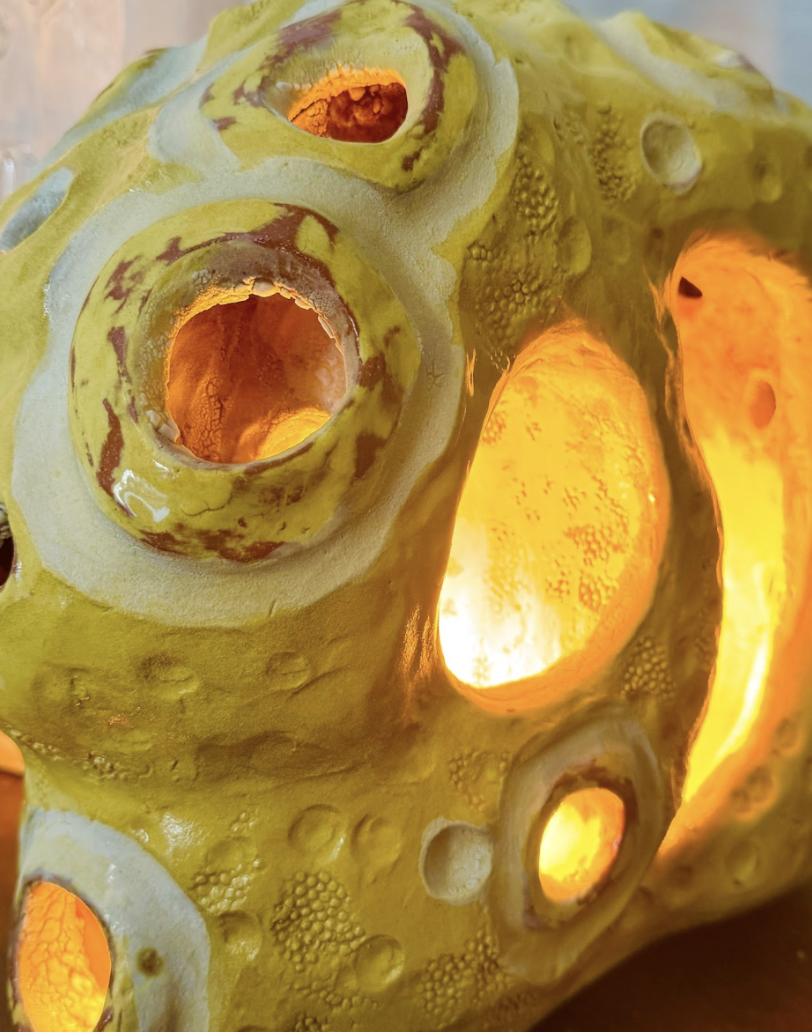
Ceramic Sculpture: "Sol y Luna"
Artist: Rosa Díaz
Part of a series collection for “Portraits of America”.
This ceramic sculpture lamp, titled “Sol y Luna," is my first hand-building project; inspired by the Indigenous peoples of America and Hispanic immigrants, highlighting their love and respect for the sun and the moon. The creation of this piece presented significant challenges, but I felt confident throughout the process thanks to the guidance of Professor Thompson.
Inspiration and Concept:
I aimed to share the profound devotion and respect that Indigenous cultures, and contemporary Hispanic communities, have for natural deities. I drew inspiration from the beautiful stories of immigrants crossing borders for generations, exchanging cultural traditions and beliefs while venerating the wonders of nature.
Design, Structure and Creative Process:
The sculpture features double-walled vessels with an organic structural form that conveys depth and energy. The contrasting vessels wrap around each other, creating a harmonious atmosphere enhanced by a crater pattern and rich textures. The vibrant yellow and cracked white glaze that covers the surface allows the piece to shine with its own beauty.
“At the beginning of the hand-building process, it was challenging to construct both walls while being cautious not to add too many coils at once. One wall needed to support the other, so I focused on minimizing stress when closing them together at the top.”
Historical Context:
Double-walled vessels have been significant in various ancient cultures, including early Mesopotamia, ancient Peru and the Hellenistic East. Notable examples include a double vessel from the Early Dynastic period found in Shuruppak (modern-day Iraq), as well as double-spout and bridge vessels developed by Indigenous groups in the Americas. Additionally, double-walled drinking cups with Hellenistic innovation were discovered in ancient Palestine.
ARTC Handbuild Sculpture ceramics Spring 2025
Professor: Lydia Thompson
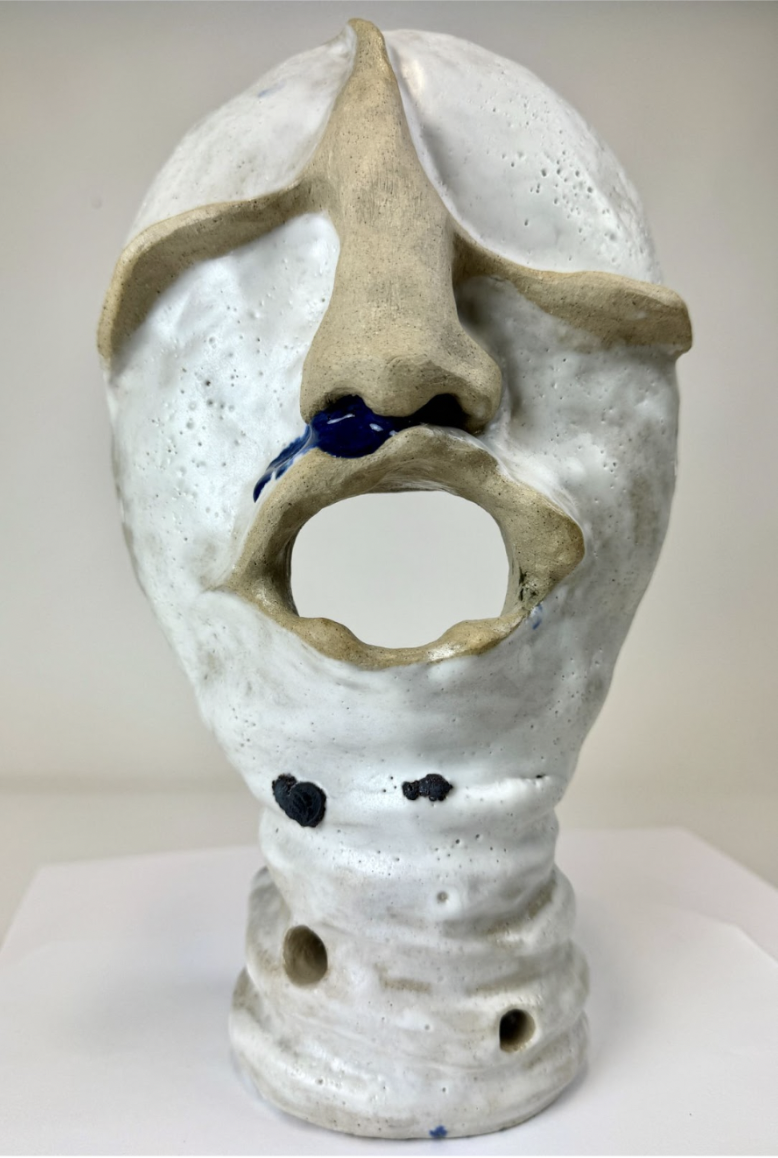
Ceramic Sculpture: "De raíz y Hueso"
Artist: Rosa Díaz
Part of a series collection for “Portraits of America”.
The ceramic sculpture "De raíz y Hueso" is a heartfelt tribute to the roots and heritage that shape our cultures. In this piece, I aimed to explore the strength inherent in our emotions and the sentiment of hope that binds us together.
The Creative Process
As I began the hand-building process, I wanted to experiment with how the metal wire would interact with the ceramic and fuse together. This curiosity was a driving force throughout both the building and firing processes. My instructor and I were eager to see the results, especially as we fired this piece inside a saggar-a fired clay container used to protect the kiln and other ceramic pieces during experimental firings.
After the experimental firing, the piece was successfully fired, and the metal wire fused into the clay body perfectly, forming marks that resembled birthmarks on this piece.
Throughout this journey, I found inspiration in the shared stories during the sketch days I hosted, where community members participated. Each of their stories formed the foundation for each of the sculptural pieces created for the project. Every coil and curve was thoughtfully placed, reflecting the natural expressions of unity and connection that resonate within our communities. I infused every detail with a sense of belonging and continuity inspired by the stories of those who came before us.
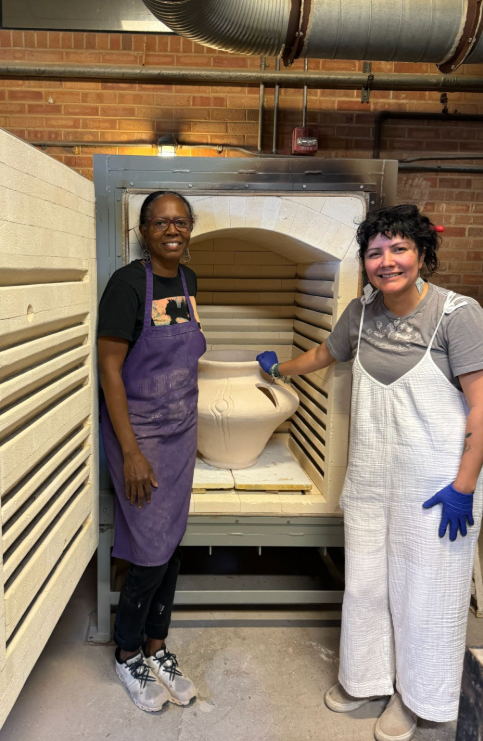
Professor Lydia Thompson and Rosa Diaz at Kiln the room.
ARTC Handbuild Sculpture ceramics Spring 2025
Professor: Lydia Thompson
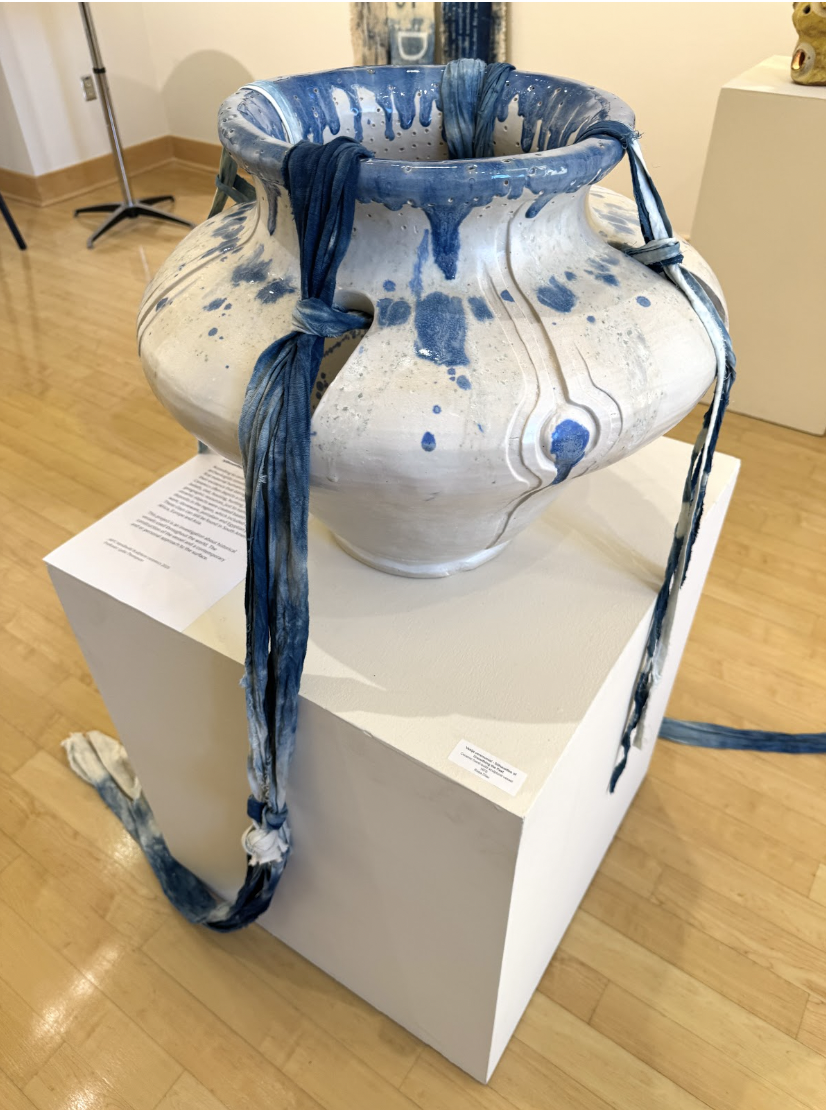
“Ceremonial Vessel” | Silhouettes of Unearthing the Past
Ceramic vessel by: Rosa Diaz
Part of a series collection for “Portraits of America”.
Silhouettes of Unearthing the Past
This project is an investigation about historical vessels used throughout the world. The construction of the vessel and a contemporary and or personal approach to the surface.
I considered it a challenge when our professor of ceramics Lydia Thompson, shared about her new class project during the spring 2025 semester. All students were in shock because this was the first time they created a hand-built sculpture with such large dimensions. The professor joined this challenge as well and made her own vessel piece to support us as we were stressed about building the huge ceramic sculptures. She always encouraged us to follow all the steps to have a successful piece in order to avoid cracks. My class was all girls, so we all helped each other carry the heavy ceramics from different classrooms to the kiln room in the Rowe building at UNC Charlotte.
The vessels I selected in between many other antique stencil shape options we had in class.
According to ceramic/craft scholars, archeologists consider ceramics to be one of the first materials humans used to record/document their existence dating back to 10,000 BC.
Ceramics often depict a culture's religious beliefs, diet, housing, hunting, wars, birth and geographic resources; just to name a few. Many ceramic objects were created based on clay deposits in the region, which included earthen ware, stoneware, porcelain and Egyptian paste.
These clays can still be found in South America, Africa, Europe and Asia.

Nativa Studio - Indigo dyeing workshops at the TAOH Outdoor Gallery, Charlotte NC.
Rosa Diaz: Weaving Culture and Nature through Art
My art is a vibrant expression of my roots and a bridge between cultures. As a Salvadoran American artist in Charlotte, NC, I aim to share a colorful tapestry that represents a unified identity and voice, promoting awareness, hope, and social change.
I see my art as a universal language that conveys what words cannot, revealing the subconscious beauty of imperfection.
In 2019, I founded Nativa Studio, where my work ranges from textile dyeing to ceramics-blooms with inspiration from my Hispanic-Indigenous heritage and love for nature. My pieces feature bold colors and surreal forms, reflecting a journey of healing and rebirth.
With a background enriched by college courses in San Salvador and the United States, I am thrilled to continue my artistic journey at UNC Charlotte College of Arts + Architecture, embracing both personal growth and lifelong learning and the power of creative expression.
When I feel the muses around, I let my soul and mind enter a moment of silence to create, allowing the inspirational voice to speak up with bold words and brilliant colors on my art.
