
RPG x Fashion: A Tale of Self-Expression
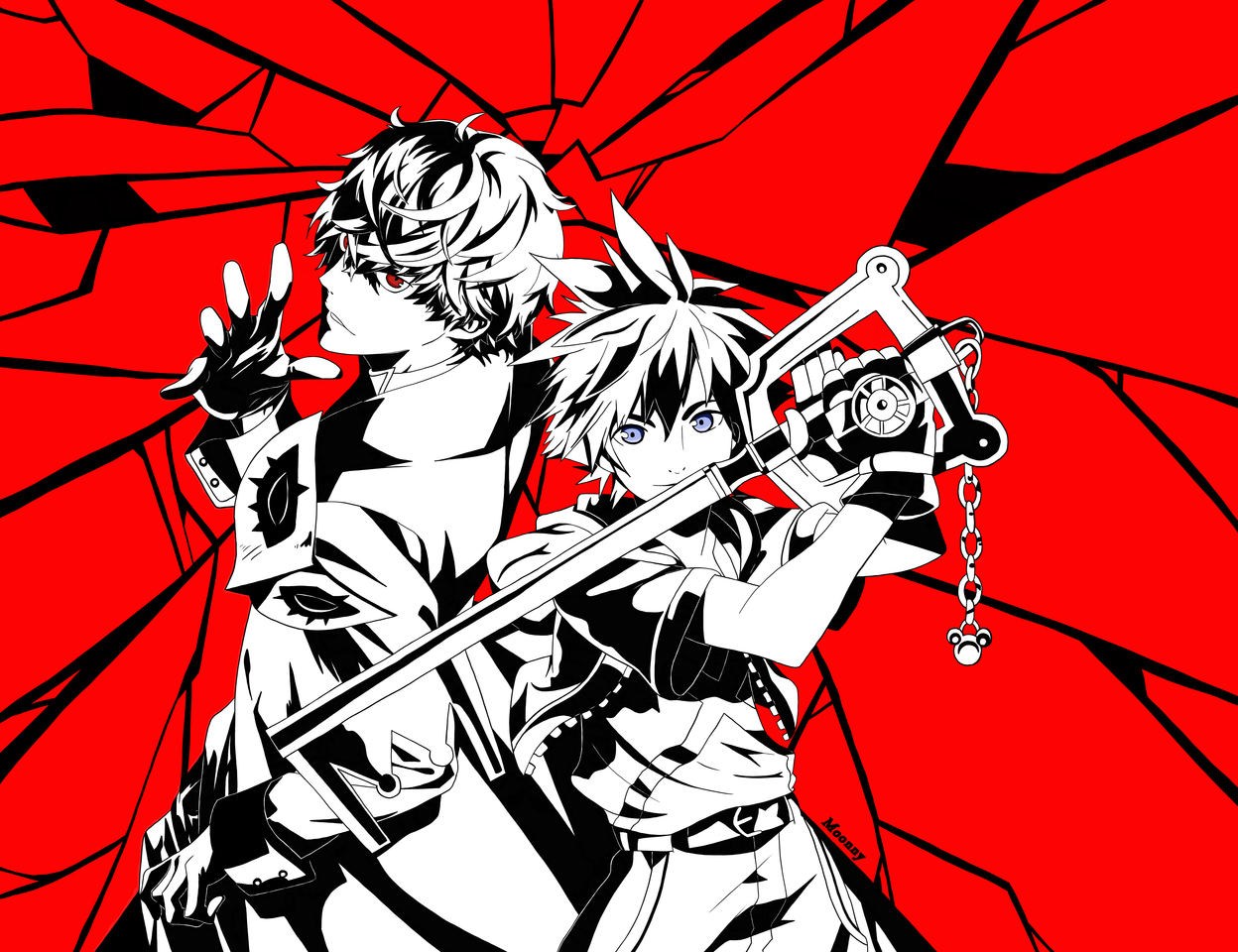
Photo Credit: Moony - persona 5 crossover Kingdom hearts Moonny - Illustrations ART street
Role-playing games have been a staple of modern video gaming, offering meaningful progression, engaging combat, and player agency that create immersive stories for all to enjoy.
Beneath these core mechanics lies another layer of narrative intricacy: clothing. Beyond escapism, RPGs use a character’s wardrobe to reflect emotional growth and express identity instantly, often speaking louder than the dialogue itself.
To achieve instant identity, game developers turned away from styles like alternative and business casual, gravitating toward a more expressive style: Y2K.
Because fifth- and sixth-generation consoles such as PlayStation lacked the hardware to process highly detailed textures, designers relied on exaggerated, styled features such as oversized cargo pants, chunky platform shoes, and massive belts and zippers to provide instant visual clarity.
Early RPGs were mostly ruled by high-fantasy environments such as living in medieval worlds and taking on frivolous quests to save princesses. The attire worn in these periods consisted of tunics and tailored gowns to represent social classes. But as developers began shifting to more tech-driven worlds in gaming, they needed more diversity within their clothing to help support high-concept narratives within video games, birthing subgenres such as Cybercore and FantasY2K.
Prominent game developer Tetsuya Nomura became a trailblazer of this look. Through video game franchises like “Kingdom Hearts,” “The World Ends With You,” and “Final Fantasy,” Nomura used Y2K not only to project identity through unapologetic fantasy, but also to establish world-building and treat character appeal as a direct extension of the environment.
For example, in a 2003 interview with Yoji Shinkawa, Nomura said the outfits for “The Bouncer” were completely overhauled during testing to ensure his characters looked visually striking and mechanically fluid when jumping and landing.
“They're a bit different, yeah. There's no real design limits for RPGs, but in action games you have to make sure it looks good in motion. In RPGs, the characters perform a wider variety of movements and actions, so more than movement per se, I focus on making their designs fit into the world and atmosphere of the game,” Nomura said.
Nomura puts this to practice throughout the “Kingdom Hearts” series. Whenever protagonists Sora, Donald, and Goofy travel across different worlds, their outfits and appearances change drastically to fit the environment. From monster-inspired attire in Halloween Town to cybernetic suits in Space Paranoids, these shifts demonstrate how clothing can serve as both environmental camouflage and a narrative anchor.
Identity and Fashion Within RPGs
While games such as “Kingdom Hearts” use fashion to adapt to external environments, other RPGs take a more internal approach, focusing on character development and self-expression.
“Persona 4” uses clothing as visual mirrors to show the internal battles between a character’s fake identity and their true self, highlighting the conflict between societal norms and one’s self-image.
For instance, Yu Narukami and his classmates are required to wear traditional Japanese school uniforms to promote equality and conformity. However, each cast member alters their outfits to avoid forced uniformity and pursue their true selves.
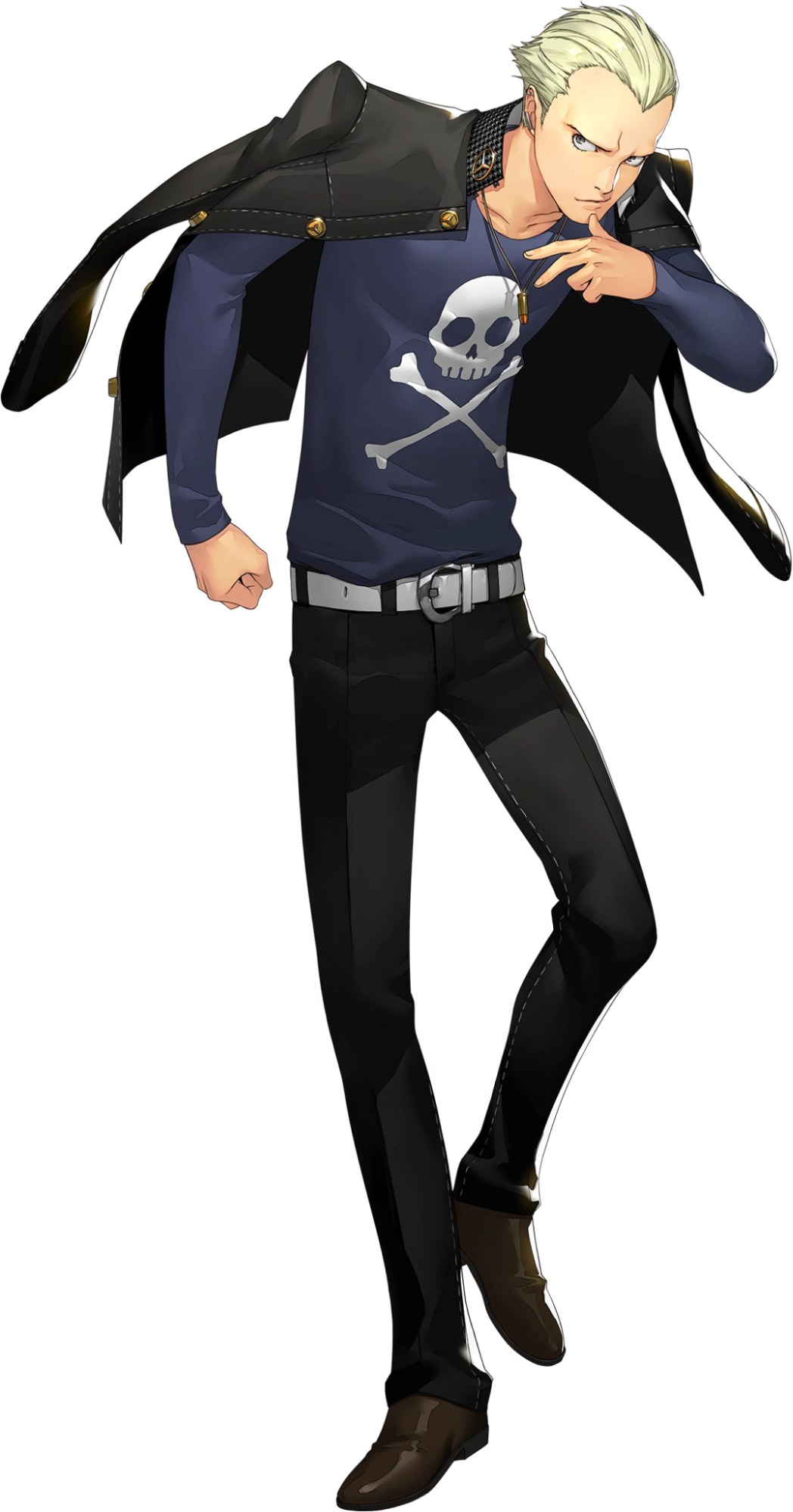
Photo credit: Kanji Tatsumi | Megami Tensei Wiki
Kanji Tatsumi and Chie Satonaka are great examples of this subtle rebellion. Kanji’s punk look, with his skull shirt and open jacket over his school uniform, projects hyper-masculinity, yet his style also carries a layer of irony. Acting as literal armor, he uses his rough exterior to scare off students so that they won’t see his true self, as he likes more feminine hobbies like making crafts.
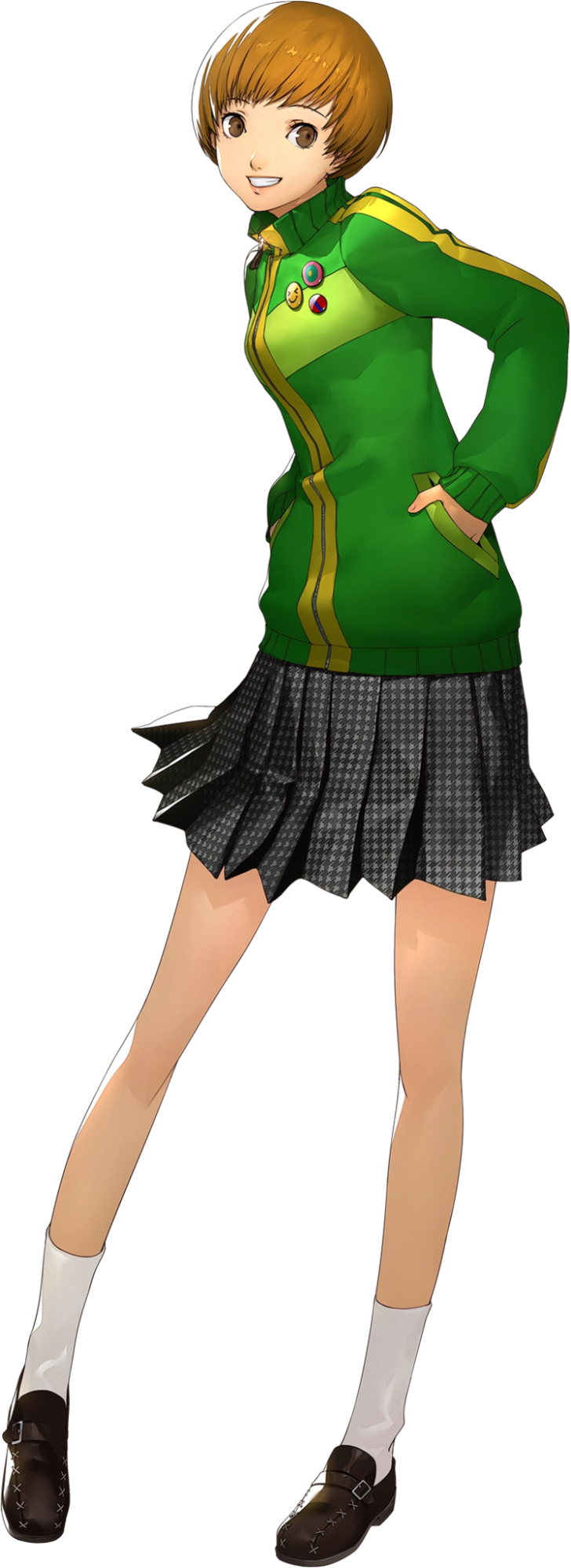
Photo Credit: Chie Satonaka | Megami Tensei Wiki
Similarly, Chie wears a bright green tracksuit covered in custom pins directly over her school uniform to ignore traditional feminine school attire. Her outfit signals to the audience her devotion to martial arts and self-defense rather than passive conformity.
Taking this a step further, “The World Ends With You” also does a great job of visual storytelling through its outfits as well. Fashion in this universe externalizes personality through Shibuya’s Y2K streetwear. Protagonist Neku Sakuraba wears giant headphones and a high-collared, zippered hoodie to barricade himself from the rest of the world, representing his antisocial mindset.
Furthermore, the title weaves fashion and accessories directly into the combat mechanics. Equipping different streetwear directly boosts character stats in combat, while aligning with Shibuya’s trendy fashion will grant players combat advantages.
Real-World and Digital Implications of Fashion
Beyond dialogue or environment, clothing allows players to uncover narrative nuances, fostering empathy and letting players see a piece of themselves reflected within the character.
In an interview with Tetsuya Nomura, Young Jump magazine asked him why every protagonist in his games is handsome when compared to other shonen characters like Luffy from “One Piece.”
“When I was in high school, a classmate was playing a game where the main character wasn’t good-looking. They said, ‘Why do I have to be ugly in the game world too?’ which really left a strong impression on me,” Nomura said.
The desire for digital idealization can apply to avatar customization, where many RPGs allow players to handcraft their own distinct avatars to imagine themselves and push the boundaries of creation. Frequently called OCs or original characters, many players even give them backstories or tie them to their own personal lives to fully embody the character.
As players connect with a character’s traits or aspire to embody them, that emotional resonance can translate directly into real-world fashion choices through everyday style mimicry or cosplay.
Cosplay represents the real-life embodiment of fictional characters through craftsmanship, projecting a sense of escapism. Building on Nomura’s insight in Young Jump magazine, cosplay fosters empowerment and enables enclothed cognition or role-playing, a psychological phenomenon in which the clothes a person wears directly influence their confidence and thought processes.
Mixing RPG fashion with everyday clothing can create a roadmap of unapologetic self-expression. Real-world fashion often feels limiting by avoiding unappealing or bizarre designs. RPG elements provide striking visual anchors that can transform a minimalist outfit into a powerful statement.
This fosters many creative combinations — from mixing oversized cargo pants with a sleek jacket or a couple of stylish chains with classic jeans to create high-concept real-world styles.
Transmogrification, or transmog, is the separation between gear stats and aesthetic appearance. Now universal in modern gaming, transmog allows players to freely customize their visual identity without conforming to high-tier stats unlocked through standard progression. “Dragon Ball Xenoverse 2” provides a classic example through the “QQ Bangs” system, equippable capsules that dictate stats independently, freeing players to wear whatever outfit best represents their personal style without penalty.
Whether digital or physical, clothing remains a vital medium for visual storytelling. Video games excel at this form of narrative display, using costume design not merely to dress a character, but to ignite an everlasting spark of personal identity within the player.